
Staircase Design Tool: Calculate and Design a Staircase in a Space
Calculate riser, tread (going), angle, total run, landings and minimum opening for headroom—all in one place. Switch between Metric (mm) and Imperial (in), apply comfort targets using Blondel’s rule (2R+G), and validate a quick stairwell opening. Built for Pakistan’s byelaws and international practice.
- Metric & Imperial modes with live presets for Residential, Commercial and Institutional projects
- Comfort-first design: Blondel (2R + G), riser/going ranges and slope guidance (30°–38° sweet spot)
- headroom & stairwell opening check to reduce collision risk with slabs and soffits
- Auto flights/landings based on max risers per flight; landing length recommended ≈ stair width
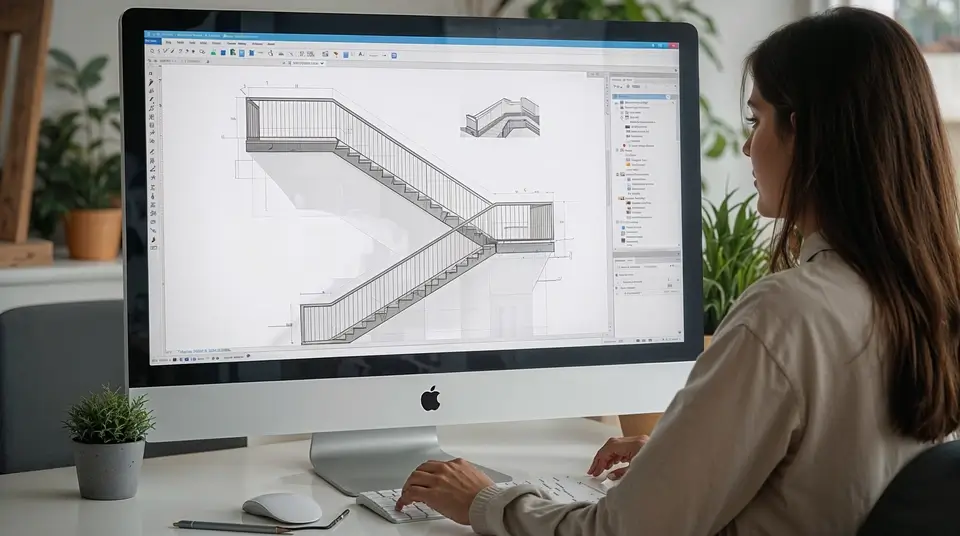
staircase design tool
How to Use STAIRCASE DESIGN TOOL
1️⃣
Select your Units (Metric mm / Imperial in)
Use Type (Residential, Commercial, Institutional)
2️⃣
Choose your approach
Optimize by comfort (Blondel 2R+G) or set a Preferred Riser height.
3️⃣
Enter floor-to-floor height
Headroom target and slab thickness to account for soffit constraints.
4️⃣
Set max risers per flight
To split stairs and add landings; enter stair width to get landing length
5️⃣
Optionally enter stairwell opening
To verify headroom clearance
6️⃣
Click Calculate TO GET
Number of risers, riser/tread, slope angle, total run, flights/landings, minimum opening, and comfort indicators.
STAIRCASE DESIGN TOOL
Plan comfortable, code-aware stairs using the Blondel rule (2R + G), riser/going ranges, and a quick headroom/opening check. Presets for Residential, Commercial and Institutional. Always confirm with your local byelaws (CDA, LDA, SBCA, RDA, DHA) or international code.
Units, Use & Approach
Vertical Geometry
Comfort Targets & Preferences
Supports Blondel (2R+G), riser/going comfort ranges, headroom and opening checks. Verify with CDA, LDA, SBCA, RDA, DHA or your international code (IBC/BS/EN).
Municipal byelaws and society rules vary between jurisdictions (CDA Islamabad, LDA Lahore, SBCA Karachi, RDA Rawalpindi, DHA and others). Minimum stair width, accessible provisions, handrail heights, nosing projections, and fire escape requirements can differ. Use this calculator for planning and pre-checks; confirm final dimensions from the latest handbooks, building codes (e.g., IBC/BS/EN) and authority comments.
staircase design calculator
STAIRCASE DESIGN TOOL
It’s a planning-level tool that converts floor-to-floor height into a comfortable, code-aware stair layout. Using the Blondel rule (2R+G), typical riser/going bands and a practical angle range, the calculator recommends a total number of risers, exact riser height, going (tread), total run, flights/landings and a minimum stairwell opening to achieve headroom. It accelerates feasibility, concept design and authority submissions while staying human-readable for clients and lenders.
Staircase Design Best-Practice Checklist
✔️ Keep stringer geometry consistent; avoid awkward last risers at landings.
✔️ Align structural grids with stair modules; coordinate with slab edges and cores.
✔️ Provide continuous handrails; check projections, returns and clear widths.
✔️ Use consistent nosing projection and anti-slip finishes on treads.
✔️ Confirm headroom over every tread; resolve conflicts at mid-landings and turns.
✔️ Plan lighting, natural light and sightlines; avoid dark, narrow runs.
✔️ Coordinate with doors and fire egress routes; confirm direction of swing and landing clearances.
gross floor area calculator
WHY choose AVENIR DEVELOPMENTS
Avenir Developments is the best architecture firm which provides design + build services for a seamless project
🛋️ INTEGRATED DESIGN PRACTICE
Combining architecture, interiors, urban design and development management
🏢 DEEP AUTHORITY-COORDINATION
Experience across CDA, LDA, SBCA, RDA, DHA and leading private societies
🫰🏼 FEASIBILITY TO DELIVERY
Concept options, code reviews, approvals, tender, supervision and close‑out.
👨🏽💻 DIGITAL TOOLS LEADERSHIP
FAR/FSI, GFA, Parking and Stair Calculators used by clients and peers across Pakistan
floor area ratio calculator
Who is STAIRCASE DESIGN TOOL for?
Designed for architects, planners, developers, investors and students needing quick checks for Pakistan and worldwide zoning contexts and approvals
🧑🏽💼
Architects & INTERIOR Designers
Refining vertical circulation early in design
🕴🏽
Property Developers & owners
Checking buildability, comfort and saleable area impact
👷🏽♀️
Project managers & consultants
Approval teams preparing compliance sets
Share your floor‑to‑floor heights, space program and byelaw constraints. We’ll propose stair options, run headroom checks, and integrate the layout with cores, lifts and egress for a clean approval path.
GET YOUR PERSONAL PROJECT PLAN IN MINUTES
Share your floor‑to‑floor heights, space program and byelaw constraints. We’ll propose stair options, run headroom checks, and integrate the layout with cores, lifts and egress for a clean approval path.
- Architecture Services
- Interior Design Services
- Construction Services
- Design + Build Services
faqs
FAQs ABOUT STAIRCASE DESIGN
Get answers to common questions about Staircase Design Tool
Blondel’s rule relates rise (R) and going (G) for comfortable walking, commonly around 630 mm in metric or 24–25 inches in imperial. The tool balances riser and going within typical ranges and targets a slope angle around 30°–38°, a band that tracks many comfort studies. For accessibility or special occupancies, adopt local code values and professional judgement.
It depends on floor-to-floor height and chosen riser. For 3.2 m (3200 mm) and ~170 mm riser, expect ~19 risers (~18 treads).
Around 30°–38° for most occupancies. Gentler for public/commercial uses; check your code.
Going is the depth of one step (tread). Total run is the sum of goings across all treads in the stair.
A common target is ~2134 mm (7′-0″), but verify local authority requirements and any project-specific standards.
The calculator sizes straight flights and landings via max risers/flight. For switchbacks or winders, apply the same outputs flight-by-flight.
faqs
Related Tools & Resources
Find out more of our amazing tools and calculators to help you out with your project.