
Efficient masjid ablution area design means creating a wudu space that lets worshippers wash comfortably, safely, and respectfully without wasting water, crowding circulation, or carrying moisture into the prayer hall. The best ablution areas combine clear entry and exit flow, non-slip flooring, correctly placed drains, durable wet-area materials, water-saving faucets, good ventilation, elderly-friendly seating, and easy maintenance access. In Pakistan, where mosques serve dense neighbourhoods, offices, schools, commercial plazas, housing societies, and Friday congregations, this is not a small back-of-house detail. It directly affects hygiene, dignity, operating cost, and the daily experience of worshippers. At Avenir Developments, our architecture services approach masjid and community-space planning as a complete circulation, plumbing, safety, and maintenance problem – not just a row of taps fixed against a wall.
| Quick Answer To design ablution areas in masjids efficiently, plan the wudu area around peak prayer flow, separate wet and dry movement, provide safe seating, use anti-slip floors, size drainage correctly, specify low-flow or sensor taps, ventilate humidity, create accessible stations for elderly and disabled worshippers, and choose materials that can survive daily washing without looking worn out. |
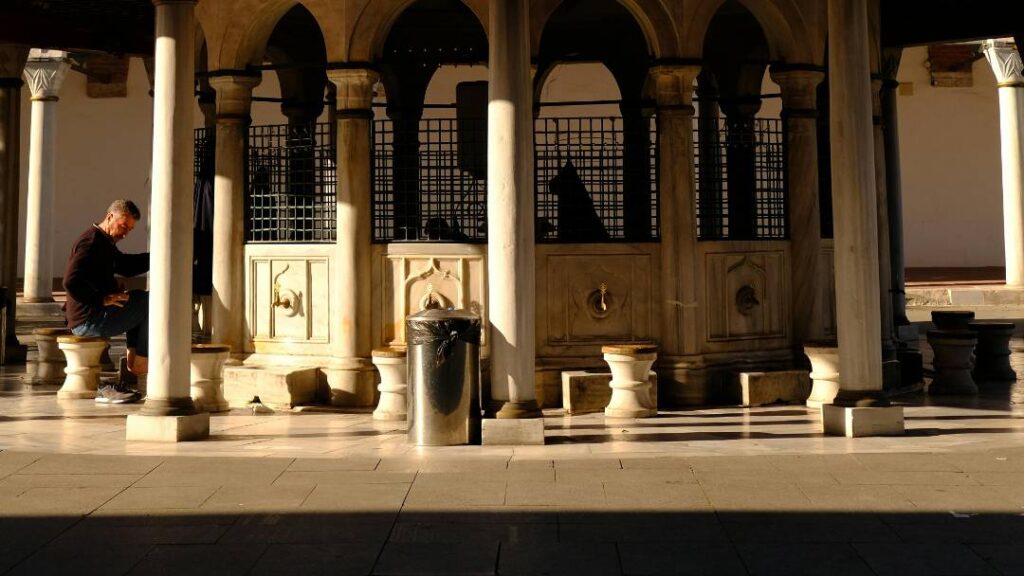
Key Takeaways for Mosque Committees and Developers
- Do not start with tile selection. Start with expected users per prayer, Jummah peak load, entry/exit movement, and maintenance responsibility.
- A good wudu area should reduce queues before namaz, prevent slips, control splash, and keep the prayer hall dry.
- Water-saving aerators and controlled-flow taps can reduce wastage without compromising the religious act of wudu.
- The elderly, children, wheelchair users, and people with limited mobility need at least one accessible wudu station near the main route.
- The best masjid ablution designs are simple, durable, quiet, easy to clean, and respectful to worshippers.
Why Ablution Area Design Matters More Than Most People Think
In many masjids in Pakistan, the ablution area is designed late in the process. The prayer hall, dome, minaret, elevation, and marble finishes receive attention first, while the wudu area is treated as a utility corner. This is where problems start: slippery floors, standing water, congested entrances, shoes blocking pathways, weak drainage, poor ventilation, exposed pipes, unhygienic corners, and elderly worshippers struggling to sit or stand.
Ablution is repeated several times a day. During Fajr, Zuhr, Asr, Maghrib, Isha, Taraweeh, Jummah, Eid, Ramadan activities, madrassah use, and community gatherings, the wudu area becomes one of the busiest parts of a masjid. If it fails, the discomfort is felt every day. If it works well, nobody notices the effort – and that is usually the sign of good design.
This is why our Avenir architecture design process begins with real use patterns, authority requirements, MEP coordination, accessibility, construction detailing, and long-term maintenance – before the final finishes are selected.
1. Start with Worshipper Flow, Not the Faucet Line
The first design decision is movement. A good masjid ablution area has a clear sequence: shoes off, dry waiting area, wudu seating, drying/drip-control zone, and then a clean route to the prayer hall. The mistake is to put all users into one narrow corridor where people entering, washing, drying, and leaving collide with each other.
Recommended flow sequence
- Entrance from outside or washroom lobby – not directly into the prayer hall.
- Shoe racks placed before the wet zone, not inside the wudu aisle.
- A dry waiting strip for peak prayer times.
- Wudu stations arranged so users do not splash onto circulation paths.
- A drip-control transition zone before stepping onto carpets or clean floors.
- A direct, clean route back to the prayer area.
For a small neighbourhood masjid, a single straight-line layout may work. For a Jummah-heavy masjid, school masjid, commercial plaza prayer area, or DHA/Bahria community masjid, we prefer one-way circulation where possible. It reduces conflict and keeps the prayer hall cleaner.
2. Size the Wudu Area for Peak Load, Not Average Attendance
Designing for average daily attendance is a common mistake. Masjids do not operate like restaurants or offices with steady flow. They work in waves. Five minutes before Jamaat, demand can suddenly spike. The number of wudu stations should be based on the busiest realistic prayer period – usually Jummah, Taraweeh, Eid preparation, school break timings, or office prayer rush.
| Practical Sizing Logic As a concept-stage rule, estimate how many worshippers may need wudu in the final 10-15 minutes before prayer. Then decide how many stations can realistically serve that load without queues blocking the entrance. Final sizing should be checked against site conditions, mosque capacity, plumbing pressure, and committee budget. |
Practical planning ranges we use as starting points
| Design Item | Compact Masjid | Community / Jummah Masjid | Design Note |
| Seat-to-seat spacing | 700-800 mm | 800-900 mm | Increase spacing where elderly users, children, or busy queues are expected. |
| Seat height | 420-450 mm | 450-480 mm for elderly-friendly stations | Avoid very low ledges that make standing difficult. |
| Clear front space | 900 mm minimum target | 1000-1200 mm preferred | Helps users sit, stand, and move without blocking others. |
| Main circulation aisle | 1000-1200 mm | 1200-1500 mm preferred | Wider aisles work better before Jummah and Taraweeh. |
| Accessible station | At least 1 where feasible | Dedicated accessible station near entry | Coordinate grab bars, turning space, and caregiver assistance needs. |
These are practical architectural starting points, not a substitute for project-specific code review. A compact urban mosque, a 1-kanal neighbourhood masjid, and a large institutional mosque will need different layouts.
3. Separate Wet and Dry Zones Clearly
The most efficient ablution areas separate wet, semi-wet, and dry areas. If this separation is weak, water travels everywhere: into shoe racks, toilet lobbies, staircases, corridors, and eventually prayer carpets. That creates odour, maintenance cost, and safety risk.
Wet-zone planning principles
- Keep wudu taps and foot-washing basins inside a defined wet zone.
- Use a small threshold, floor level change, linear drain, or slope break to stop water migration.
- Provide a semi-wet standing strip where users can drip-dry before moving to the prayer area.
- Keep shoe racks in a dry zone with a clear visual boundary.
- Avoid placing electrical panels, switches, or storage cupboards in splash zones.
4. Use Non-Slip, Durable, Easy-to-Clean Materials
In ablution areas, beautiful glossy tiles can become dangerous. Wet floors, soap residue, bare feet, elderly users, and rushed movement before Jamaat increase slip risk. Research on mosque ablution spaces has also highlighted slip-resistance concerns in wet and soapy conditions. For Pakistan, the safest approach is to specify anti-slip porcelain, textured stone, terrazzo with correct finish, or commercial wet-area tiles with documented slip performance.
Material recommendations
- Floors: anti-slip porcelain, textured terrazzo, flamed stone, or wet-area tile with reliable grip when wet.
- Walls: full-height or minimum splash-height tiles behind tap lines; avoid painted plaster in direct wet zones.
- Seats: solid surface, granite/stone with rounded edges, or tiled masonry ledges with waterproofing underlay.
- Joints: epoxy grout or high-quality waterproof grout in high-use zones.
- Corners: rounded coves or easy-clean detailing where possible; avoid dirt traps behind seats and pipe chases.
The finish should also suit mosque etiquette. It should feel calm, clean, and modest – not overly decorative in a way that distracts from worship or makes maintenance difficult.
5. Design Drainage Like a Core MEP System
Ablution areas fail when drainage is treated casually. Good drainage is not just “put a drain somewhere.” It requires slope, trap placement, access for cleaning, pipe sizing, waterproofing, and coordination between architecture, structure, and plumbing.
Drainage details that make a real difference
- Use continuous linear drains or frequent floor traps near the tap line rather than one far corner drain.
- Slope the floor gently toward drains so water moves naturally without making the floor uncomfortable or uneven.
- Keep drain covers removable for cleaning hair, soap residue, sand, and debris.
- Avoid long hidden horizontal pipe runs without inspection access.
- Coordinate waterproofing upturns behind seats and along walls before tile work begins.
- Keep cleanouts accessible so maintenance staff do not need to break tiles later.
This is where professional coordination matters. A mosque wudu area should be designed by architects and MEP consultants together, then executed with proper site supervision through dependable construction services.
6. Reduce Water Waste Without Making Wudu Difficult
Water saving in wudu areas must be handled respectfully. The aim is not to restrict worshippers harshly; the aim is to support thoughtful use, reduce waste, and protect shared resources. Pakistan’s water-security concerns are serious enough that institutions and communities now need to treat water efficiency as a design responsibility, not only a utility bill issue. IWMI Pakistan Water Week 2025 emphasized water security as a national priority, which makes mosque-level conservation highly relevant.
A 2025 Springer study on wudu water sustainability notes that tap-open time during ablution can include significant wasted water, and discusses water-efficient aerators as a practical intervention. EPA WaterSense bathroom faucet guidance also states that WaterSense-labeled faucets and accessories using a maximum of 1.5 gallons per minute can reduce sink flow by 30 percent or more compared with the standard 2.2 gallons per minute.
Water-saving strategies for masjid ablution areas
- Use low-flow aerators where pressure is stable and user comfort remains acceptable.
- Consider sensor or push taps in high-use public areas, but choose durable commercial-grade models.
- Avoid excessive water pressure that causes splash and unnecessary consumption.
- Install zone valves so a broken tap line can be repaired without shutting down the entire wudu area.
- Use signage that reminds worshippers to avoid waste in a respectful tone.
- Consider greywater reuse for landscaping only after filtration, health, maintenance, and local approval implications are properly studied.
Make the Ablution Area Accessible for Elderly and Disabled Worshippers
A masjid serves everyone: young children, elderly people, people recovering from injury, wheelchair users, and worshippers with limited mobility. The Accessibility Code of Pakistan 2006 summary explains that buildings and public spaces should be designed to be accessible for persons with disabilities and the elderly, including features such as accessible entrances, ramps, restrooms, handrails, grab bars, non-slip surfaces, and safe egress.
Accessible wudu station features
- Place at least one accessible wudu station near the main entrance route where possible.
- Provide stable grab bars or support rails coordinated with wall structure, not weak tile anchors.
- Use a higher seat and adequate knee/foot clearance for comfort.
- Create a wider turning and helper zone for wheelchair users or caregivers.
- Keep the accessible route free from shoe racks, buckets, cleaning equipment, and loose mats.
- Use high-contrast edge details where floor levels change.
Accessibility should not look like an afterthought. It should be part of the dignity of the masjid.
8. Ventilate Humidity, Odour, and Cleaning Chemicals
Ablution areas are humid spaces. Without ventilation, moisture stays trapped, grout turns dark, metal corrodes, paint peels, and odours build up. In basement prayer areas and commercial plazas, this issue becomes even worse because natural ventilation may be limited.
The CDC cleaning and disinfecting facility guidance highlights the importance of adequate ventilation when workers are using cleaning and disinfecting products. In a masjid, this supports both worshipper comfort and janitorial safety.
Ventilation design checklist
- Use operable windows or ventilated courtyards where site planning allows.
- Add exhaust fans sized for high-humidity wet areas, not decorative small fans.
- Avoid exhausting damp air into internal corridors or prayer halls.
- Use materials that tolerate humidity: anti-rust hardware, quality sealants, and waterproof backing boards.
- Coordinate cleaning storage with ventilation so chemicals are not kept in stagnant corners.
9. Keep Plumbing Maintainable and Visually Controlled
Masjid committees often focus on construction cost at the start, but maintenance cost is where weak wudu design becomes expensive. Broken taps, leaking joints, blocked drains, failed waterproofing, and exposed pipes can make the area look neglected quickly.
Maintenance-friendly design moves
- Use accessible plumbing ducts behind tap walls instead of burying everything permanently.
- Specify commercial-grade taps, valves, traps, and floor drains that local plumbers can service.
- Create a janitorial point with floor washing access and storage for cleaning tools.
- Avoid designs that require bending behind narrow ledges to clean properly.
- Use modular components where future replacement is likely.
A simple detail that can be opened, cleaned, and repaired is often better than a luxury detail that looks good on day one but cannot survive daily use.
10. Coordinate Wudu Area Design with Mosque Interiors
The ablution area should not feel disconnected from the rest of the masjid. It should support the same design language: calm, clean, modest, and easy to navigate. Our interior design services team looks at lighting temperature, wall finishes, signage, mirror placement, shoe storage, acoustic comfort, and transitions into the prayer hall so the full experience feels intentional.
A quiet wudu area also matters spiritually. Harsh lighting, echo, clutter, excessive ornamentation, and confusing movement can disturb the calm before prayer. A well-designed ablution space should help worshippers prepare with ease and focus.
Pakistan-Specific Design Examples
| Project Type | Common Problem | Better Design Response |
| Small neighbourhood masjid in Lahore | Limited plot size, congested entry, water entering prayer area. | Use compact one-way wudu flow, dry shoe zone, linear drain at tap line, and anti-slip tile. |
| DHA / Bahria community masjid | Higher expectations for finishes and elderly users. | Provide wider aisles, accessible station, concealed plumbing ducts, premium but durable finishes. |
| Commercial plaza prayer area | Basement humidity, shared toilets, peak office prayer rush. | Add mechanical exhaust, controlled-flow taps, clear signage, and robust cleaning access. |
| School or madrassah masjid | Children splash water, taps left open, rough use. | Use push taps or aerators, rounded edges, durable seats, visible drains, and easy supervision. |
| Large Jummah masjid | Queues block entrance before prayer. | Separate entry and exit, provide waiting strip, increase station count, and keep movement away from shoe storage. |
Common Mistakes to Avoid in Masjid Ablution Area Design
- Using glossy floor tiles because they look premium, even though they become slippery when wet.
- Putting shoe racks inside the wet zone, which creates congestion and moisture problems.
- Using too few drains or placing drains far from the tap line.
- Not providing at least one elderly-friendly or accessible wudu station.
- Burying all plumbing without inspection access.
- Ignoring ventilation in basement or enclosed ablution areas.
- Choosing imported fittings with difficult spare parts availability.
- Allowing water to travel directly toward prayer carpets.
- Designing the wudu area after the main plan is already frozen.
Avenir Developments’ Recommended Design Process
For a masjid, community centre, commercial prayer area, or institutional project, we recommend a clear design process before construction begins:
- User study: daily prayer count, Jummah count, special event use, gender-specific requirements, elderly users, and children.
- Site and byelaw review: access, levels, services, ventilation, water supply, drainage connection, and authority requirements.
- Concept layout: prayer hall relationship, washrooms, wudu area, shoe storage, entry/exit, and wet/dry transitions.
- MEP coordination: water pressure, drainage slope, trap locations, ventilation, valves, electrical safety, and maintenance access.
- Material specification: anti-slip floors, wall tiles, seat details, grout, tap types, waterproofing, and edge protection.
- Construction drawings and BOQ: clear drawings that contractors can price and execute without guesswork.
- Site execution and quality checks: waterproofing inspection, slope check, drainage testing, fixture testing, and final cleaning handover.
Before committing to drawings, mosque committees and developers can also review our architecture and design fee guide to understand how professional design scope, deliverables, and documentation affect project clarity.
Efficient Ablution Area Design Checklist
| Checklist Item | What to Confirm | Why It Matters |
| Capacity | Stations sized for peak prayer rush | Reduces queues and crowding. |
| Circulation | Separate entry, wash, dry, and exit movement | Prevents confusion and water tracking. |
| Flooring | Anti-slip wet-area material | Improves safety for all worshippers. |
| Drainage | Correct slope, traps, and cleanouts | Avoids standing water and odour. |
| Water efficiency | Aerators, pressure control, or sensor/push taps | Reduces water waste and utility cost. |
| Accessibility | Elderly-friendly and wheelchair-aware station | Supports dignity and inclusion. |
| Ventilation | Natural or mechanical exhaust | Controls humidity and cleaning odour. |
| Maintenance | Accessible valves, ducts, and cleaning storage | Keeps the facility functional for years. |
| Prayer hall transition | Dry zone before carpeted area | Protects cleanliness of the prayer space. |
Common FAQs about Ablution Area Design
Here are some frequently asked questions about ablution area design:
What is the best way to design ablution areas in masjids efficiently?
The best way is to plan the ablution area around user flow, water control, safety, accessibility, and maintenance. The design should include a clear wet zone, non-slip flooring, properly sloped drainage, comfortable seating, water-saving taps, good ventilation, and a dry transition before the prayer hall.
How many wudu stations does a mosque need?
It depends on peak attendance, not only mosque size. The design team should estimate how many worshippers need wudu in the 10-15 minutes before Jamaat, especially before Jummah, Taraweeh, and Eid. A small neighbourhood mosque may need fewer stations, while a community masjid or commercial prayer area may need a higher station count and wider circulation.
What flooring is best for a masjid ablution area?
Anti-slip porcelain, textured terrazzo, flamed stone, or commercial wet-area tiles are usually better than glossy marble or polished tiles. The surface should remain safe when wet, easy to clean, and durable under daily washing.
How can mosques reduce water waste during wudu?
Mosques can reduce water waste by using low-flow aerators, controlled-flow taps, suitable pressure settings, zone valves, respectful signage, and regular maintenance. The goal is to reduce waste without making wudu uncomfortable or disrespectful.
Should ablution areas be separate from toilets?
Where space allows, yes. Separating the wudu area from toilets improves hygiene, dignity, and circulation. In compact projects, at least separate the clean wudu route from toilet cubicle doors and avoid forcing worshippers through congested toilet areas before entering the prayer hall.
How should elderly worshippers be accommodated in wudu areas?
Provide at least one higher, stable seat with grab bars or support rails, wider front clearance, non-slip flooring, and a nearby dry route. Avoid low ledges and narrow aisles that make standing difficult.
Is mechanical ventilation necessary for ablution areas?
It is strongly recommended in enclosed, basement, or high-use ablution areas. Natural ventilation is helpful where possible, but mechanical exhaust controls humidity, odour, and cleaning chemical fumes more reliably.
Can Avenir Developments design masjid ablution areas?
Yes. Avenir Developments can help with architecture, interior planning, construction coordination, material selection, and execution-focused drawings for masjids, community facilities, commercial prayer areas, and institutional projects in Lahore, Islamabad, Rawalpindi, and other relevant locations in Pakistan.
Conclusion: Good Wudu Design Is About Dignity, Cleanliness, and Long-Term Performance
Efficient masjid ablution area design is not only about saving space. It is about helping worshippers perform wudu with ease, safety, cleanliness, and respect. The right design reduces water waste, prevents slippery floors, improves hygiene, protects the prayer hall, and makes daily maintenance easier for mosque committees.
If you are planning a masjid, community centre, school prayer area, office mosque, commercial plaza prayer room, or institutional project, contact Avenir Developments for a practical architecture and design consultation. We can help you plan a wudu area that works during daily prayers, Jummah rush, Ramadan gatherings, and long-term use – with clear drawings, buildable details, and Pakistan-specific construction understanding.
WhatsApp: +923001101807