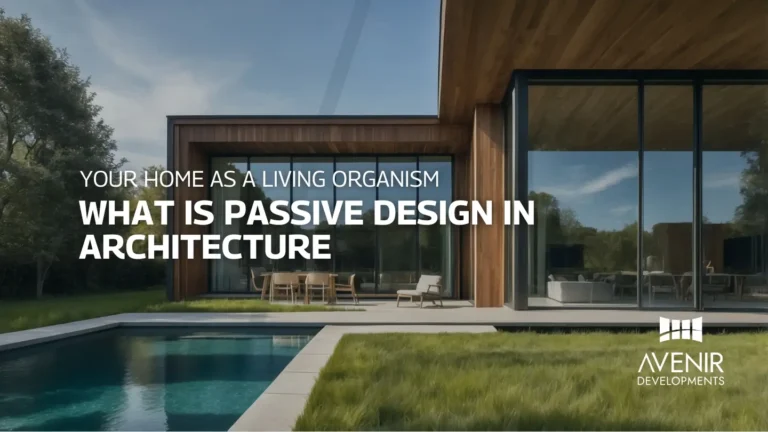
Passive design in architecture means designing a building so it stays cooler, brighter, better ventilated and more comfortable before expensive mechanical systems are added. In Pakistan, it uses orientation, shading, roof insulation, cross ventilation, daylight, thermal mass and landscape to reduce heat gain and improve everyday comfort. For homeowners in Lahore, Islamabad, Rawalpindi, DHA, Bahria Town, Lake City and Gulberg Greens, passive design is not just a sustainability trend. It is a practical way to build a home that feels better, uses less energy and performs better over time.
At Avenir Developments, we treat passive design as the first layer of intelligent planning within our architecture and design services. Before finalising elevations, imported finishes or lighting fixtures, the first question should be simple: will this home stay comfortable in Pakistan’s climate after the family moves in?
Key takeaways for Pakistani homeowners
- The best passive design decisions happen before the floor plan, elevation and HVAC layout are finalised.
- In most Pakistani homes, roof heat gain, west-facing walls and unshaded glass are the biggest comfort problems.
- Passive design does not mean avoiding air conditioning. It means designing the building so ACs work less and rooms remain more comfortable.
- Pakistan’s Energy Conservation Building Code 2023 formally recognises energy-efficient design, building envelopes, passive building design, insulation, lighting and ventilation as part of responsible construction.
- A good architect should study plot orientation, byelaws, privacy, room use, construction details and MEP coordination together, not separately.
Why Passive Design Matters in Pakistan in 2026
Passive design in architecture matters because buildings are now under pressure from heat, electricity costs and poor execution quality. The International Energy Agency says buildings account for around 30% of global energy demand. The UNEP Global Status Report for Buildings and Construction 2024/2025 says the buildings and construction sector consumes 32% of global energy and contributes 34% of CO2 emissions. For Pakistan, the issue is even more personal: many homes are uncomfortable because the design allows heat to enter faster than mechanical systems can remove it.
PIDE’s analysis on energy-efficient buildings in Pakistan notes that improved building envelope efficiency can reduce electricity demand for air conditioning by 20%. That is exactly why design decisions such as insulation, shading, glazing, roof treatment and ventilation should be discussed before construction starts, not after the house becomes hot.
Heat is also becoming a serious urban issue. The Lahore Heatwave Management Plan 2025-2028 highlights growing heatwave risks, urban heat exposure and the need for shade, green spaces and cooling interventions. This makes climate responsive architecture in Pakistan more than an environmental discussion. It is a comfort, health, cost and long-term property value issue.
In our work, the most common design mistake is not a lack of expensive materials. It is poor sequencing. A beautiful elevation is developed first, and only later does the client ask why bedrooms are too hot, why the lounge needs lights during the day, or why ACs keep running. Passive design prevents many of these problems because it starts with the plot and climate before styling the building.
Passive Design vs Passive House vs Sustainable Architecture
Passive design is a broad architectural approach. It improves comfort by using natural site and building strategies: orientation, shading, insulation, daylighting, ventilation, thermal mass and landscape. Passive House is a stricter performance standard with detailed certification requirements. Sustainable architecture is broader still, covering energy, water, materials, waste, lifecycle performance and environmental impact.
For most Pakistani homes, the practical goal is not necessarily formal Passive House certification. The goal is buildable performance: a home that looks premium, works with the climate, follows relevant byelaws and can be executed with reliable local construction details.
Quick comparison
| Term | Meaning | Best use in Pakistan | Risk if misunderstood |
| Passive design | Climate-first architectural planning | Homes, villas, apartments, farmhouses, commercial buildings | Treating it as only “green talk” instead of practical planning |
| Passive House | Strict energy-performance standard | Useful as inspiration for high-performance homes | Assuming every Pakistani home needs certification |
| Sustainable architecture | Wider environmental and lifecycle approach | Large homes, developments, commercial projects | Focusing on labels but ignoring buildability |
7 Passive Design Principles That Work in Pakistan
1. Start with orientation before elevation design
The first mistake in many Pakistani homes is designing the elevation before understanding the sun. West-facing walls and windows usually receive harsh afternoon heat when the outdoor temperature is already high. If bedrooms, lounges or home offices face west without protection, the room may remain hot even after sunset.
A good house plan uses stairs, stores, toilets, wardrobes, service areas, thicker walls or shaded passages as heat buffers on the harsher sides. North light can be excellent for soft daylight. South-facing openings can work well when designed with proper overhangs. East light is usually easier to manage than west light, but morning glare still needs thought.
2. Use external shading, not just curtains
Curtains and blinds help with glare, but they do not stop heat before it enters the glass. External shading is more effective because it blocks sun outside the building envelope. Deep overhangs, recessed windows, pergolas, jaali screens, louvers, balconies, verandahs and well-placed trees can reduce unwanted solar gain while keeping the elevation elegant.
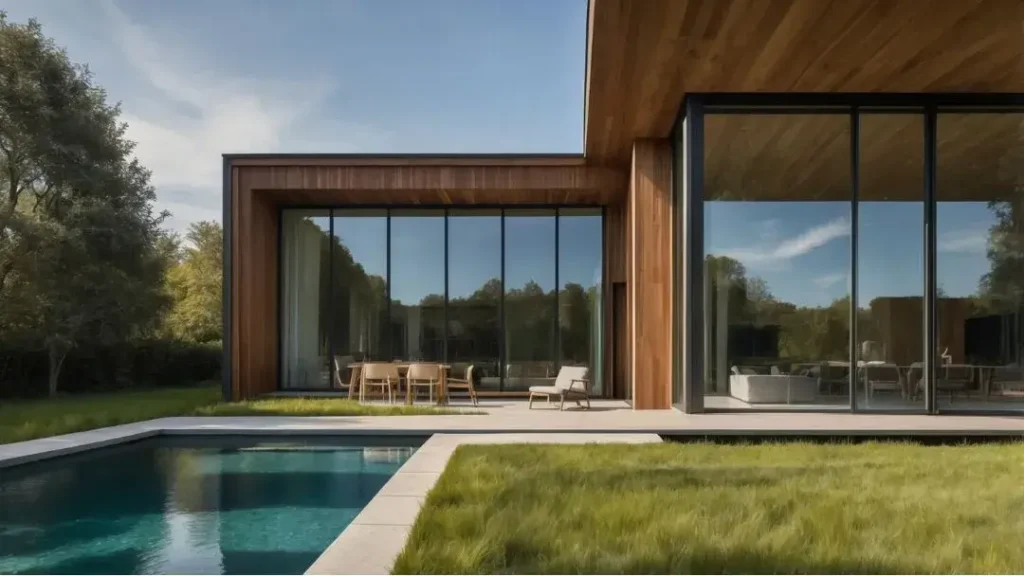
This is where modern architecture and passive cooling techniques can work together. A clean recessed window, a minimalist pergola or a shaded balcony can look premium and still perform well. Passive design should not make a house look old-fashioned; it should make modern architecture more intelligent.
3. Treat the roof as the hottest wall of the house
In Pakistan, the roof is often the most neglected surface even though it receives direct sun for hours. Roof insulation, reflective finishes, ventilated roof assemblies, shaded terraces, solar panels and roof gardens can reduce heat transfer when detailed correctly.
For many homes in Lahore and Islamabad, roof insulation may be one of the highest-value upgrades. It is less visible than marble, but the family feels it every afternoon and night. It should also be coordinated with waterproofing, drainage, terrace use and solar planning.
4. Design cross ventilation as a path, not a wish
Natural ventilation works only when air has an entry point, an exit point and a pressure difference. Random windows do not automatically create cross ventilation. A good plan considers window placement, internal doors, courtyards, double-height spaces, stair wells, vents and privacy screens together.
In Lahore, ventilation must also consider dust, smog, security and noise. In Islamabad and Rawalpindi, seasonal breezes and cooler evenings can be used more often. In farmhouses, shaded verandahs and landscape corridors can make outdoor air more comfortable before it enters indoor spaces.
5. Bring daylight without glare and heat
Good daylight makes a home feel generous, calm and premium. The goal is not maximum glass; the goal is controlled light. Courtyards, shaded skylights, clerestory windows, narrow gardens and double-height spaces can bring daylight deep into a house without overheating it.
This matters in 10 Marla and 1 Kanal houses where internal rooms often depend on artificial lighting during the day. A well-designed courtyard or shaft can improve daylight, ventilation and privacy at the same time.
6. Use thermal mass carefully
Concrete, brick and stone can store heat. In hot climates, exposed thermal mass should be shaded and ventilated so it does not absorb excessive daytime heat and release it at night. Material selection should not be reduced to aesthetics; colour, exposure, backing wall, cavity and shading all affect performance.
7. Use landscape as climate equipment
Trees, lawns, shaded courtyards, water-sensitive planting and pergolas can change how a site feels. In farmhouses, landscape can become a major passive cooling asset. On compact plots, small planting strips and shaded terraces still help. The important point is to plan landscape with architecture, not after the grey structure is complete.
Pakistan-Specific Examples: How Passive Design Changes Real Projects
10 Marla west-facing house in DHA Lahore
A west-facing 10 Marla house in DHA Lahore needs careful protection. Better solutions include a recessed elevation, vertical fins, buffer spaces, limited west glass, insulated roof treatment and a shaded terrace. The result is a cooler, more refined house because the design works with the climate.
1 Kanal house in DHA Islamabad or Gulberg Greens
A 1 Kanal plot gives more flexibility. In Islamabad, the design should balance hot summers with cooler winters. South-facing openings can bring useful winter sun if shaded in summer, while courtyards, terrace gardens and balconies bring daylight without turning the house into a glass box. This is also where early design decisions affect the eventual architecture and design fee in Pakistan because scope, drawings, 3D views, consultant coordination and detail level should match the performance expected from the home.
2 Kanal luxury farmhouse near Chak Shahzad
A farmhouse should not depend only on air conditioning to feel like a retreat. Verandahs, deep roof projections, tree belts, shaded sitting areas, separated guest wings and cross-breezes can create a calmer environment. Avenir’s Modern Farmhouse in Islamabad project shows how daylight, climate comfort, privacy and modern farmhouse living can be part of the architectural brief rather than a later decoration exercise.
Apartment or commercial building in Islamabad
Passive design is not limited to houses. Apartment and commercial projects need shaded façades, controlled window-to-wall ratios, daylight planning, ventilated corridors, efficient cores and MEP coordination. In these buildings, small design inefficiencies are multiplied across many units or floors.
How Avenir Developments Applies Passive Design
Avenir Developments applies passive design through the Avenir design process, not as an afterthought. Our architecture team studies the plot location, authority requirements, sun path, room zoning, privacy, views, structural logic, MEP routes and construction details together. This matters because passive design fails when architecture, structure and services are designed in isolation.
For example, a window may look perfect on an elevation, but if it causes glare, adds heat, clashes with a beam, blocks furniture placement or fights the AC zoning, it is not good design. Similarly, roof insulation should be coordinated with waterproofing, terrace use, solar placement and drainage. These decisions need to be made early, preferably before approval drawings and IFC drawings are finalised.
Our approach is practical: create homes that look beautiful, feel comfortable and can be executed using locally available materials and clear details. Passive design must be buildable, or it disappears during construction.
Passive Design Checklist Before You Finalise Your House Plans
- Has the architect studied the plot orientation and strongest heat exposure?
- Are west-facing rooms protected with buffers, shading or reduced glass?
- Is the roof insulated or otherwise protected from direct heat gain?
- Are windows placed for controlled daylight, not just elevation symmetry?
- Does cross ventilation have a real air path through rooms, courtyards or double-height spaces?
- Are courtyards, verandahs, terraces and landscape planned as comfort tools?
- Are HVAC zones, beams, waterproofing, drainage and solar placement coordinated early?
- Do the approval drawings and construction details preserve the passive design intent?
Is Passive Design More Expensive?
Not always. Many passive design decisions cost little or nothing when made early. Orientation, zoning, room depth, window placement, courtyard position and overhang logic are design decisions before they are cost decisions. The expensive version is usually the opposite: build first, discover the heat problem later, then add bigger ACs, thicker curtains, extra backup power, insulation patches and more maintenance.
Some upgrades add cost: better roof insulation, higher-performance glazing, external shading, cavity walls or improved air sealing. These should be judged as lifecycle decisions because a home must perform for decades, not only on possession day. When clients compare options, they should also study the realistic house construction cost in Pakistan so that performance decisions are budgeted honestly from the beginning.
FAQs About Passive Design in Architecture in Pakistan
What is passive design in architecture?
Passive design in architecture is the use of building orientation, shading, insulation, ventilation, daylight, thermal mass and landscape to create comfortable indoor spaces with lower dependence on mechanical cooling, heating and artificial lighting.
Is passive design suitable for homes in Pakistan?
Yes. Passive design is highly suitable for Pakistan because many cities face long hot seasons, rising cooling demand, high electricity bills and dense urban heat. It is useful for 5 Marla, 10 Marla, 1 Kanal, 2 Kanal, farmhouse, apartment and commercial projects.
Can passive design reduce electricity bills?
Passive design can reduce dependence on air conditioning and artificial lighting, but exact savings depend on plot orientation, building size, insulation, glazing, user behaviour, AC efficiency and construction quality. A proper design review or energy model gives a more reliable estimate.
What is the best passive cooling strategy for Lahore homes?
For Lahore, the most important strategies are roof insulation, west-side shading, reduced unprotected glass, cross ventilation during suitable hours, reflective or protected roof surfaces, trees, shaded courtyards and careful daylighting.
How does passive design work in Islamabad?
Islamabad needs a balanced approach because summers are hot but winters can be cool. A good passive design captures useful winter daylight while shading openings in summer, protects roofs and west-facing walls, and uses natural ventilation during comfortable periods.
Is Passive House the same as passive design?
No. Passive House is a formal performance standard with rigorous requirements for insulation, airtightness, thermal bridge reduction, high-performance windows and controlled ventilation. Passive design is a broader architectural approach that can be applied even without formal certification.
Can passive design be added to an existing house?
Yes, but results vary. Existing homes can benefit from roof insulation, external shading, window upgrades, air sealing, reflective roof treatments, improved ventilation and landscape shading. The best results still come when passive design is included from the first concept stage.
Does passive design make a house look less modern?
No. Some of the best modern homes use passive design. Recessed glazing, clean overhangs, deep balconies, screens, courtyards, planted terraces and minimalist shading devices can make a home look more premium while improving performance.
Which architect should I hire for passive house design in Pakistan?
Look for an architecture firm that understands local climate, DHA/LDA/CDA/RDA byelaws, material availability, construction detailing, MEP coordination and practical execution. Passive design must be buildable, not just attractive in renders.
Is passive design worth it for overseas Pakistanis building in Lahore or Islamabad?
Yes. Overseas Pakistanis usually want lower maintenance risk, reliable comfort and fewer surprises during construction. Passive design helps make the home easier to operate, more comfortable and more future-ready when the owners are not present every day.
Final Thoughts: Passive Design Is the Foundation of Better Architecture in Pakistan
Passive design in architecture is not about making a home complicated. It is about making obvious decisions correctly: where the sun hits, where air moves, where heat enters, where daylight is useful, where privacy matters and how the building will feel after people move in.
For Pakistan’s next generation of homes, villas, apartment buildings and commercial projects, passive design should be treated as the first layer of good architecture. When combined with thoughtful planning, byelaw-aware design, structural coordination, efficient MEP planning and quality construction, it can create spaces that are cooler, more comfortable, more resilient and more valuable over time.
If you own a plot in Lahore, Islamabad, Rawalpindi, DHA, Bahria Town, Gulberg Greens, Lake City or another major housing society, do not wait until construction starts to think about heat, light and ventilation. These decisions belong at the beginning of the design process.
Design a Cooler, Smarter Home with Avenir Developments
Planning a 5 Marla, 10 Marla, 1 Kanal, 2 Kanal, farmhouse, apartment or commercial project in Pakistan? Share your plot location, plot size and design requirements with Avenir Developments. Our team can help you evaluate orientation, passive design opportunities, architecture, interior planning, construction coordination and authority-ready drawings before expensive decisions are locked in.
WhatsApp: +923001101807